



















A zirconia disc is a candidate for your lab when its documented uses, material properties, and processing requirements fit the work you plan to produce.
Start with the restoration, narrow the material options, then confirm that your equipment and sample results support the choice.
At KEKR, we recommend applying that sequence to our materials as well as any other disc you are considering. This guide connects each check to a purchasing decision, so you can move from a product description to an option worth evaluating in your own workflow.
Key Takeaways
- Choose around the restoration and its design requirements before comparing strength or translucency figures.
- Confirm the exact disc's layer structure, format, machine fit, CAM settings, and processing instructions.
- Use a representative sample to support the purchase decision, and keep conclusions within what you actually tested.
A Simple Zirconia Disc Selection Framework
A successful sample informs the purchase decision; approval remains limited to the evaluated material and documented workflow.
- Define the Restoration. Identify the intended use and the applicable design requirements.
- Review the Material Profile. Consider the required strength and translucency balance, then check what changes across the layers.
- Match the Milling Setup. Confirm disc format, holder fit, machine requirements, and CAM configuration.
- Verify the Sintering & Finishing Workflow. Confirm the applicable furnace program, target shade, and staining, glazing, or polishing requirements.
- Validate with a Representative Sample. Test and document representative work against your lab's criteria.
- Make the Purchase Decision. Review the evaluated material and documented workflow, resolve remaining technical questions, and confirm supply availability and technical support before routine purchasing.
This is a selection sequence, not a ranking by a single specification. A successful sample does not automatically approve the purchase. Base the final decision on the material and workflow actually evaluated, with the remaining technical and supply questions resolved.
Start With the Restoration You Need to Produce
Define the work first: anterior or posterior, single crown or bridge, full-contour or veneered, and tooth-supported or implant-supported. For bridges and full-arch work, include the proposed design. These details establish what you need the material documentation to address.
Review the manufacturer's current instructions for use (IFU) and processing documentation for the exact product. Check permitted uses, minimum wall thickness, connector requirements, and any restrictions that apply. A connector is the part joining units of a bridge.
If a proposed use is not covered, resolve that question before selecting the disc for the case. For example, a recommendation for a bridge needs the corresponding design requirements, not just a statement that the material is strong.
Selection principle: a higher advertised flexural-strength value is not a reason to extend a product beyond its documented indications.
Confirm the Disc Fits Your Milling Workflow
A zirconia disc's diameter alone does not establish milling compatibility.
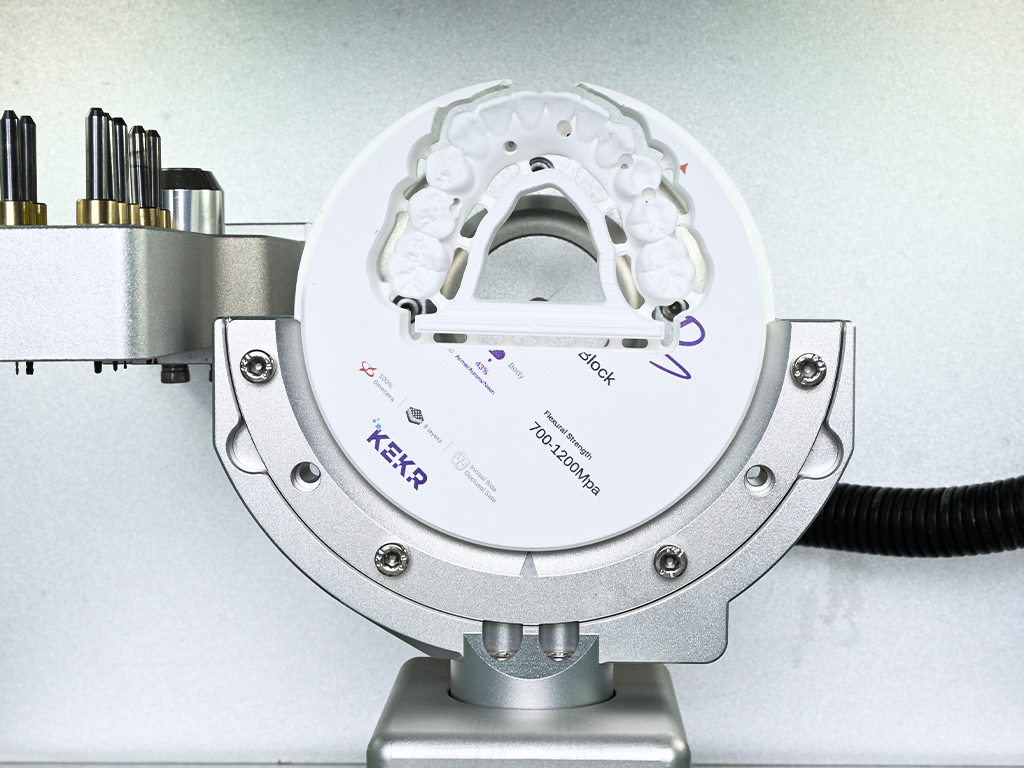
Check its complete dimensions, including the rim or step and body height, against the machine and the holder that secures it.
The DGSHAPE DWX-52D setup guide, hosted by Roland DG, for example, specifies separate dimensions for the disc's step and body. It also notes that some workpieces can be unsuitable despite being made from a listed material. Those requirements describe that machine, not universal disc compatibility.
For the exact disc under consideration, compare the format with your machine model, holder, and any adapter. A general “open system” description still needs those details confirmed. This check establishes whether the blank can proceed to the software and processing review.
CAM software prepares the milling process, so physical fit is only one part of the decision.
The exocad Material Blank Library documentation includes machine-dependent blanks, dimensions, lot numbers, and scale or shrink information where applicable.
Confirm how your own software handles the candidate material.
- Identify the blank definition and machining strategy to use.
- Confirm the source of the material-specific scale or shrink information and how it is entered or imported.
- Check the applicable milling mode, tools, and material instructions.
- Resolve any disagreement between material instructions and machine or CAM requirements before the trial.
If you are also choosing equipment, KEKR dental milling machine selection guide covers that separate purchase decision.
Interpret Strength and Translucency in Context
Strength and translucency figures should support a restoration-driven material decision, not replace it.
Establish the indication and design requirements first, then judge the material profile against the mechanical and esthetic needs of the proposed work. Neither the highest strength nor the highest translucency is an automatic reason to choose a disc.
Flexural strength describes resistance to bending in a test. Translucency describes how light passes through the material.
To compare figures meaningfully, check the strength test method, the material or layer tested, and whether the reported value is an average or a minimum specification.
For translucency, review the measurement method, specimen thickness, and surface condition.
In an experimental study of monolithic zirconia, Kim and colleagues found that reducing specimen thickness affected color and translucency. A study of graded zirconias by Soares and colleagues found differences in mechanical and optical properties between layers in the tested materials.
The external studies cited in this guide provide industry evidence within their tested conditions; they do not establish KEKR product performance. Their practical value here is to explain why the measurement conditions and material architecture belong in your selection record.
For example, two translucency percentages without specimen thickness do not yet provide a sound basis for ranking the discs. Put the test conditions beside each figure, then consider whether the documented material profile fits the restoration you defined.
What Does “Multilayer” Actually Mean?
“Multilayer” alone does not tell you whether a disc has a color gradient, a composition gradient, or changes in strength and translucency. The distinction matters when interpreting the data and positioning a restoration within the disc.
In a study of three multilayer zirconia grades, Kolakarnprasert and colleagues reported pigment differences between layers within each grade, while the grades themselves differed in composition. The materials examined by Soares had distinct layer properties. These studies describe different material architectures.
Review a layer diagram and the manufacturer's nesting guidance. Nesting means positioning the restoration within the disc before milling. Confirm the incisal direction, toward the biting edge, and the cervical direction, toward the gumline, along with any positioning restrictions.
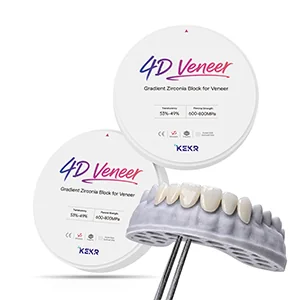
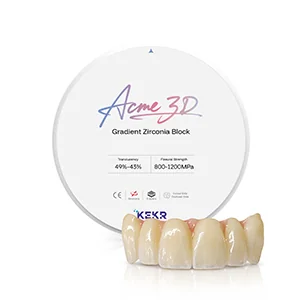
Treat labels such as 3D, 4D, and 5D as manufacturer-specific product identifiers, rather than a cross-brand performance scale. The name alone is not enough to establish layer composition, performance characteristics, or permitted uses.
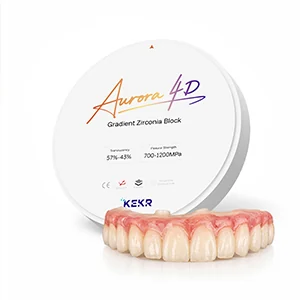
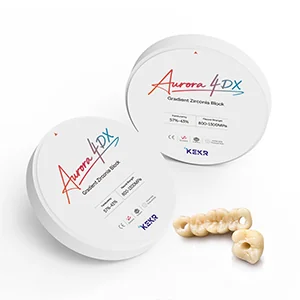
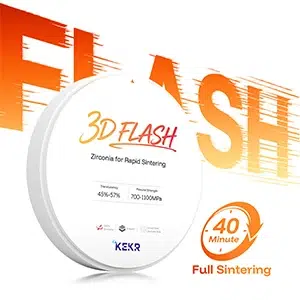
Apply the same approach when reviewing KEKR Aurora 4D, Neon 5D, or 3D FLASH. Compare the exact model's documented layer structure, strength and translucency profiles, indications, and processing requirements. The number in the name is not a reason to rank one above another.
Where a needed detail remains unclear, resolve it before making a model-specific decision.
Verify the Sintering Workflow
A disc remains a candidate only if you can establish the appropriate sintering route for your intended setup. An advertised short cycle does not, by itself, confirm that the program applies to your furnace and restorations.
Review the complete program, including heating, holding, and cooling stages. Check drying instructions where applicable, loading or support requirements, and any differences between conventional and speed-sintering conditions. Peak temperature and total time alone leave important processing questions unanswered.
A 2022 experimental study by Nonaka and colleagues found that high-speed sintering and specimen thickness affected optical and mechanical properties in the tested 5Y zirconia. The research included manufacturer-affiliated authors and examined specific conditions; it does not establish a universal restriction on speed sintering.
Before the sample trial, match the material instructions to the applicable furnace program and retain that version with your test record. This gives you a defined process to evaluate, rather than an improvised schedule borrowed from another material.
Check Shade and Finishing Requirements
Confirm the shade and product code you intend to order, including whether the disc is white, pre-shaded, or supplied with a shade gradient. Review the relevant coloring, staining, glazing, or polishing instructions to see how the material fits your planned finishing process.
Assess the finished shade on a representative test restoration. The thickness-related color changes in the Kim study are a reason to record test-piece geometry and avoid comparing unlike specimens as if only the material had changed.
Use consistent reference shades, viewing conditions, and assessment methods. Record the finishing steps and, if used, the shade-measuring instrument and procedure. The decision is whether the evaluated result and required finishing work meet your lab's criteria for that application.
Validate a Representative Sample Before Routine Purchasing
Evaluate a sample with your intended equipment and the manufacturer's instructions. Set criteria for fit, margins, shade, and finishing beforehand. This purchasing evaluation is not a material-certification protocol.
- Choose representative work. Use bench test designs within the documented indications that reflect the restorations you plan to produce.
- Record the material and workflow. Include product, shade, dimensions, lot, machine, holder, CAM settings, and sintering program.
- Review the result. Assess fit using your established method, inspect margins and surfaces, and note shade, finishing effort, and any unexpected adjustment.
- Investigate one variable at a time. Agree on any process change with the relevant technical contact, stay within applicable instructions, and record the change before repeating the test.
- Keep the conclusion specific. Record what passed your criteria and what further evaluation other shades, sizes, or materials need.
A successful bench sample supports that purchasing evaluation. It does not establish long-term clinical performance, every-lot consistency, or suitability across the entire product range.
Zirconia Disc Selection Checklist
Use this checklist to bring the material requirements and your lab's workflow into one decision record. Clarify any mismatch before moving from a candidate disc to routine stock.
| Selection check | What the lab should verify | Clarify before selecting if... |
|---|---|---|
| Restoration / indication | Intended use and applicable design requirements | The proposed restoration is not addressed in the instructions |
| Exact product | Model, shade, size, and current documentation | The documents describe a different model or version |
| Disc format | Diameter, rim or step, and body dimensions | The format description does not identify the required geometry |
| Mill / holder fit | Machine model, holder, adapter, and permitted workpiece dimensions | Fit has only been described in general terms |
| CAM setup | Blank definition, machining strategy, and scale or shrink information | The setup for your software remains uncertain |
| Strength / translucency | Test conditions, relevant layer, and fit with the intended work | The figures cannot yet be compared on a meaningful basis |
| Multilayer structure | What changes across the layers and the nesting guidance | The intended position of the restoration is unclear |
| Sintering | Complete applicable program and furnace conditions | Only a temperature or total cycle time is available |
| Shade / finishing | Shade option, finishing instructions, and evaluated result | The proposed route differs from the evaluated process |
| Sample validation | Representative test, recorded process, and acceptance criteria | Important observations remain unexplained |
| Technical support | Current instructions, relevant technical data, and a contact for process questions | A selection-critical technical question is still open |
Keep the applicable IFU, processing guide, specification, and relevant test reports with the decision record. For routine purchasing, also confirm availability for your market, lead time, and technical support.
Two Common Questions Before Buying
Are zirconia discs with the same diameter interchangeable?
Do not assume so. Check the rim and body dimensions, machine and holder requirements, CAM configuration, and material processing instructions. Physical fit is one part of the check.
Can one successful sample qualify an entire zirconia range?
Keep the conclusion limited to what you evaluated. A sample record for one product, shade, and process is not evidence for every other combination. Review what changes across the range and plan further evaluation where relevant to your work.
Need Help Matching a Zirconia Disc to Your Workflow?
Share your restoration types, milling machine model, holder, CAM software, sintering furnace, target shades, and current zirconia workflow. These details give our team a practical starting point for discussing options to evaluate and the technical information needed before sample testing.
Review the KEKR zirconia product range, then contact KEKR about your workflow.
We can help identify options to evaluate and discuss the relevant technical details.
Confirm the exact product's documented requirements and sample arrangements before testing; the final material choice should follow the selection checks and your evaluation results.